
Commercial Multifamily 101: Mountain West First-Time Investor

If you're looking at your first commercial multifamily deal in Utah or Idaho, here's the real, no-fluff version of what you need to know before you start touring properties or calling brokers.
The Basics: When Multifamily Becomes Commercial
Five units or more is commercial. Below that, you’re in residential-loan land, and the whole thing feels a lot like buying a house. Once you’re in commercial territory, the game changes: the bank values the property on the income it produces — NOI (income minus expenses) and cap rate (NOI ÷ price) — not on what the house next door sold for. That single shift changes how you shop, how you negotiate, and how you finance. If those terms are new to you, start with our guide to the key metrics to watch in CRE.
Get the real T-12 (trailing-twelve-month operating numbers) from the seller, not their optimistic pro forma, and don’t be shy about asking for bank statements or utility bills to back it up.
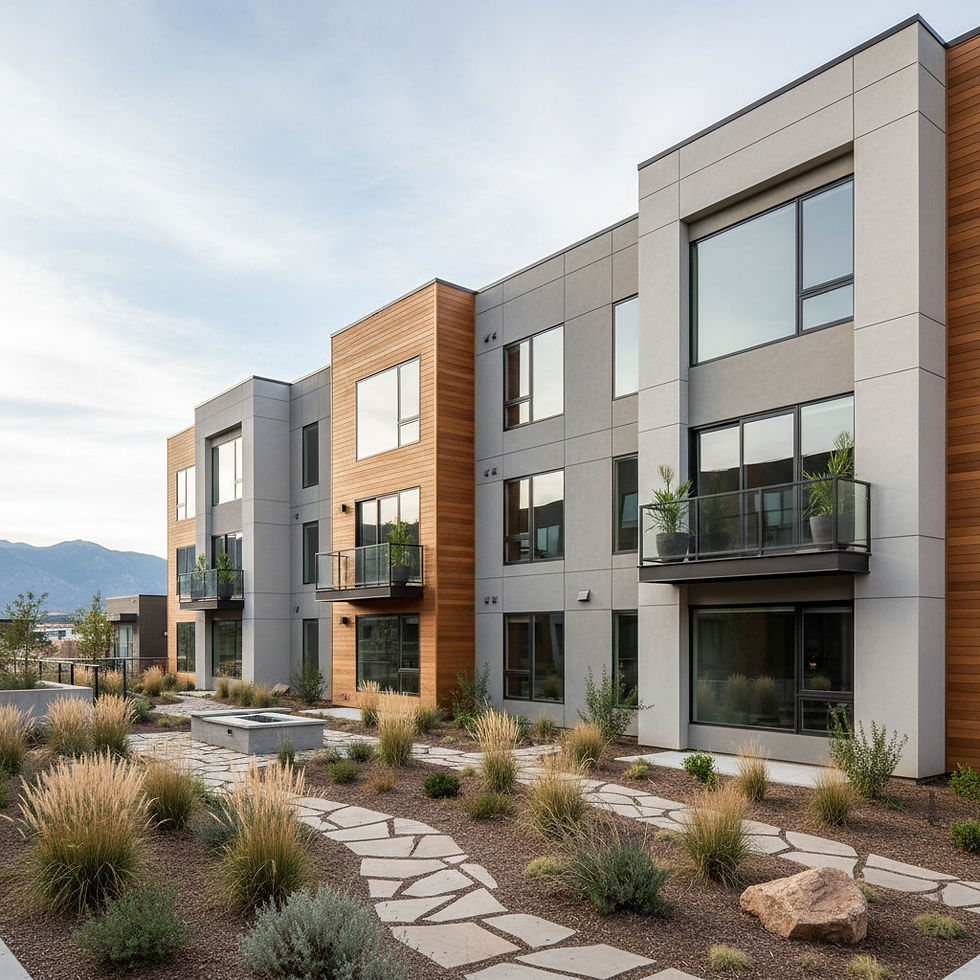
What Does a First Commercial Deal Really Look Like?
Most first-timers don’t start with a 100-unit complex, and they shouldn’t — but “small” in commercial terms still usually means something in the 5–20 unit range, not a duplex. That’s a meaningfully bigger check than a house: expect 20–40% down on the purchase price, plus reserves the bank will want to see sitting in your account before they’ll talk seriously.
If that down payment is more than you want to carry alone, partnering with one or two other investors on your first deal is common and not a red flag — it just means you split the equity and the decision-making. A lot of first commercial owners in this region got there exactly that way: a small group of friends, family, or coworkers pooling capital on one property before going out on their own for deal two.
Financing Your First Multifamily Property
Lenders will want your net operating income to cover the mortgage payment with real room to spare — roughly 1.25x or better. That’s the debt service coverage ratio (DSCR), and it’s one of the most important numbers in deciding whether you qualify.
Property taxes can also change after you buy. Utah and Idaho are non-disclosure states, so counties don’t simply reset your taxes to the purchase price, but assessors do update market values each year and may ask you to disclose what you paid. Don’t underwrite off the seller’s current tax bill. Insurance has gotten pricier across the interior West too, so get a real quote before you finalize your offer, not after.
Build a Commercial Team Before You Shop
Before you shop seriously, build a team that knows commercial real estate:
A multifamily lender who actually underwrites multifamily deals day-to-day (a residential loan officer usually isn’t the right person).
An investment sales broker who works income properties rather than houses.
A real estate attorney to handle the purchase agreement and entity structure.
A CPA who knows commercial real estate — depreciation, cost segregation, and passive-loss rules get complicated fast once you’re past a fourplex.
A property manager, worth talking to early, even if you plan to self-manage at first, so you know what professional management costs and what it would take off your plate.
It’s also worth walking several deals with someone experienced before you own one, so you can calibrate what a lender’s underwriting will accept versus what just looks good on a flyer.
What Due Diligence Looks Like
Once you’re under contract, due diligence is where a lot of first-timers get nervous, so here’s roughly what it looks like. You’ll bring in an inspector for the physical condition of the roof, HVAC, plumbing, and electrical systems. Check the HVAC and roof before winter finds the gaps for you — a furnace failure in January is a very different problem here than it is in a mild climate.
You’ll also want a line-by-line audit of the actual rent roll against the leases themselves. It’s not unusual to find a unit or two renting for less than the seller claimed, or a “current tenant” who’s actually month-to-month with no lease at all. Request utility bills, maintenance history, and copies of any service contracts (landscaping, snow removal, pest control) that transfer with the sale.
None of this is meant to kill the deal. It’s meant to make sure the price you’re paying matches the property you’re getting, and it gives you real leverage to renegotiate if something doesn’t check out.
How Long Does It Take to Buy a Multifamily Property?
Realistically, plan for the whole process to take longer than a house purchase. Commercial due diligence periods typically run 30–60 days, financing takes longer to finalize than a residential loan, and your first couple of offers may not win in a competitive market. That’s normal, not a sign you’re doing something wrong.
The goal on deal number one isn’t to find a perfect property; it’s to get through a full commercial underwriting and closing process once, so deal number two moves faster and with a lot more confidence. Most first-time buyers who talk to enough people find that the biggest thing standing between them and closing isn’t the money — it’s getting comfortable making the decision on incomplete information, the same way every experienced investor in the room once had to.
Utah Multifamily Market: Salt Lake, Ogden, and Provo Are Converging
For years Provo outran Salt Lake and Ogden on rent growth, riding BYU-driven rental demand and Utah County’s growth boom. That gap has been closing — Salt Lake, Ogden, and Provo are increasingly moving together rather than Provo running hot on its own.
According to Northmarq’s Q2 2026 Salt Lake City report, Salt Lake just posted its largest quarterly rent increase in years, with asking rents projected near $1,600 per month by year-end. A chunk of new downtown supply means vacancy is still expected to edge up to about 7%. The metro added roughly 12,000 jobs over the past year: solid, not spectacular, and honestly a healthier pace than the frantic growth of 2021.
If you’re shopping in Utah County or Weber County specifically, that convergence is worth remembering. The old assumption that Provo automatically outperforms is getting shakier, so underwrite each submarket on its own numbers rather than its old reputation. For a broader look at the region, see Utah Isn’t a Flyover State Anymore.

Boise and the Treasure Valley: Calmer, and That’s a Good Thing
Boise has settled into slow, low-drama growth — about 1.3% annual rent growth, occupancy creeping up toward 94%, and builders pulling way back on new construction (deliveries are running well under the 10-year average). Less new supply competing for tenants means the market should tighten faster if job growth holds up, which makes existing Treasure Valley product in Boise, Meridian, and Nampa look more attractive than it has in a couple of years.
It’s a less flashy pitch than “get in before it explodes,” but slow and steady is honestly the safer setup for a first deal, where you’d rather not be learning the ropes in the middle of a boom-and-bust cycle.
Money stuff:
Budget 20-40% down, lenders wanting your net operating income to cover the mortgage payment with real room to spare (roughly 1.25x or better — this is the debt service coverage ratio, and it's the single number that decides whether you qualify). Property taxes often jump right after your sale closes since counties reassess at the new price, so don't underwrite off the seller's current tax bill. Insurance has gotten pricier across the interior West too, so get a real quote before you finalize your offer, not after. And check the HVAC and roof before winter finds the gaps for you — a furnace failure in January is a very different problem here than it is in a mild climate.
Bottom Line: A Better Time to Buy Your First Deal
Both states are past the “everything goes up no matter what” phase and into a more normal cycle. That’s actually the better time to buy your first commercial deal: you can underwrite real, current numbers instead of chasing a story, you’re not competing with the frenzy pricing of a couple of years ago, and you’ve got a little more room to be thorough instead of feeling rushed into a decision. Take your time on the team and the diligence, and the rest tends to fall into place.
Thinking about your first multifamily purchase in Utah or Idaho? Reach out to Derek and the Legend Commercial team to talk through deals, underwriting, and next steps.
Frequently Asked Questions
How many units make a multifamily property commercial?
Five or more. Properties with one to four units are generally financed with residential loans, while five units and up are underwritten as commercial real estate based on the income the property produces.
How much do I need to put down on a commercial multifamily property?
Typically 20–40% of the purchase price, plus cash reserves the lender will want to see in your account. Many first-time buyers partner with one or two other investors to share the down payment.
What DSCR do lenders require for a multifamily loan?
Lenders generally want a debt service coverage ratio of roughly 1.25x or better, meaning the property’s net operating income covers the mortgage payment with room to spare.
How long does due diligence take on a commercial multifamily deal?
Commercial due diligence periods typically run 30–60 days, and commercial financing takes longer to finalize than a residential loan.
Related Reading
Derek Kofoed is a commercial real estate broker with Legend Commercial in Salt Lake City.

